Thrust 1
Developing Conditional Generative Model for Complex Polymer Design
We develop generative models for complex polymers that can reason over chemistry, architecture, topology, and target material properties.
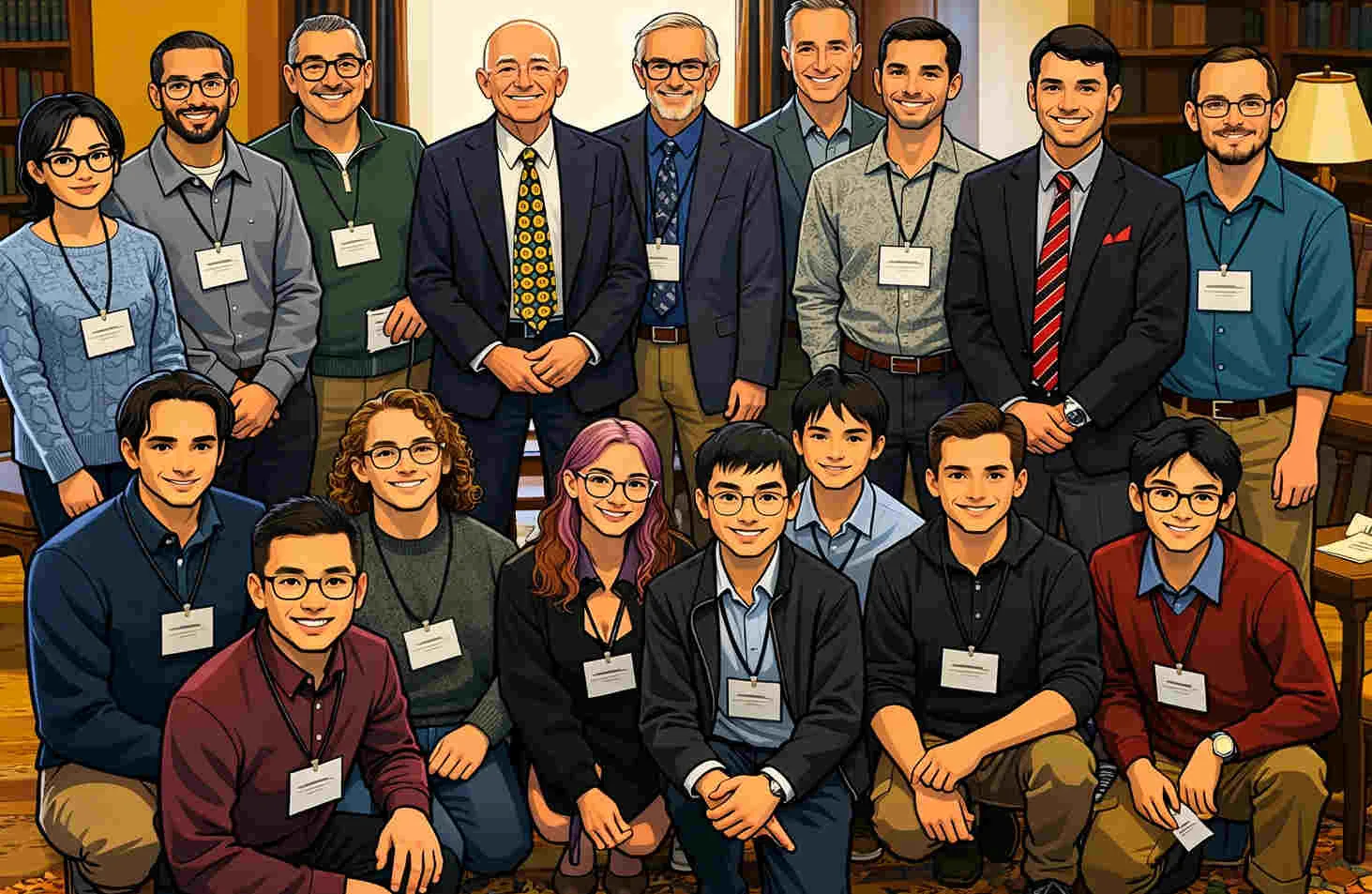
The Shi Group is a fully computational research group developing physics-informed AI methods, including generative models, language models, AI for science foundation models, and graph learning, to understand, design, and engineer complex polymers, soft materials, macromolecules, biomacromolecular systems, and molecular interfaces. We are particularly interested in developing physics-informed AI models into applications of polymers and biomacromolecules in semiconductor, healthcare, sustainability, energy, and gas separation.
Thrust 1
We develop generative models for complex polymers that can reason over chemistry, architecture, topology, and target material properties.
Thrust 2
We build predictive AI models that connect polymer structure, physical state, external conditions, and material response across polymer families.
Thrust 3
We integrate molecular simulation, field-based modeling, and machine learning to accelerate sampling, connect scales, and interpret polymer structure-property relationships.
Thrust 4
We develop physics-informed AI methods that integrate bioinformatics with polymer physics and statistical physics to understand and design proteins, RNA, and lipid nanoparticles (LNPs). By combining sequence and structural information with physical principles governing molecular interactions and collective behavior, we aim to build predictive and generative models that connect molecular composition and structure to function and guide molecular and formulation design.
The Shi Group has access to NVIDIA H100 GPU computing resources at highly affordable rates through the Ohio Supercomputer Center (OSC). We have also received a computing allocation through the NSF-funded ACCESS program to support our research. These resources support our AI method development, model training, and computational studies of polymers and biomacromolecules. UToledo's AI Institute is expected to provide additional local high-performance computing resources in the near future.
We collaborate with the Polymer Institute at the University of Toledo to connect AI-driven polymer design and computational predictions with experimental validation. Experimental work is carried out by our collaborators, rather than within the Shi Group. Their measurements and evaluations of designed materials provide feedback to refine our AI methods and guide subsequent designs.